
ARTIST STATEMENT
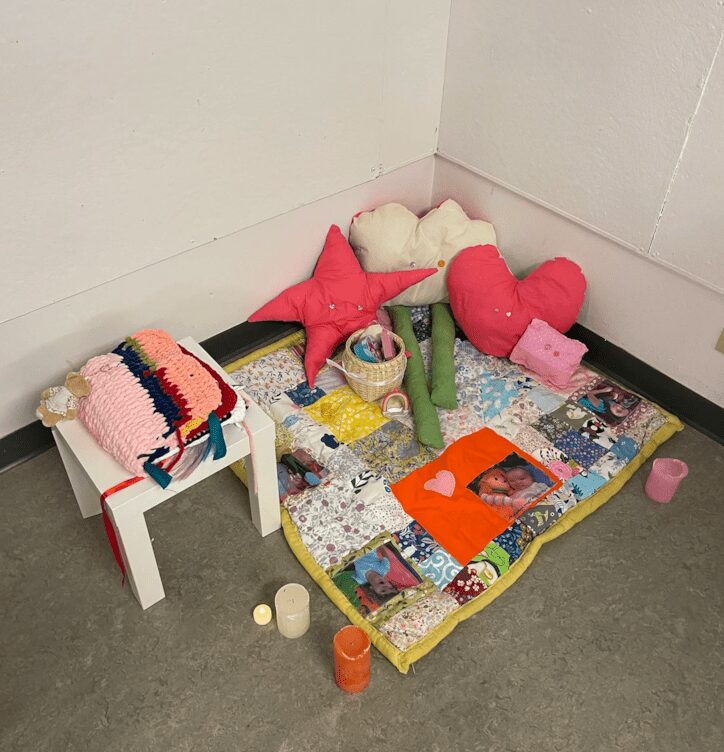
Goodbye, Cindy is an interactive installation that explores the bittersweet process of letting go of childhood memories. Through tenderly made soft objects, the work creates a tactile and intimate space that invites the audience to reflect on their transition to adulthood. The comforting yet nostalgic objects carry fragments of childhood, suggesting saying farewell to a cherished part of oneself–be it childhood toys or a younger version we were. The materials which are seen as functional and domestic mediums, become a vehicle for storytelling and personal expression. Through slow stitching, the artwork turns into an outlet for telling stories of processing, making sense, and understanding, along with positive change, growth, and metamorphosis. Each object echoes the comfort of childhood items yet their transformation into art reflects how these once-familiar objects can take on new meanings as we grow. Thus, working with familiar objects allowed the artist to reshape her own memories, and to hold onto them in a new form. Each stitch made is symbolic of taking the pieces of the past and weaving them into something new, and a tender reminder that even as we leave parts of ourselves behind, they remain part of who we are. The doll Cindy represents a personal connection of the artist with her favorite childhood toy, making the experience highly universal yet deeply personal. It’s about the moments of change that define us, the things we lose, and the new selves we discover along the way, which are crucial components for profound transformation.
ABOUT THE ARTIST
Nehir Uslu is a Chicago-based budding artist, illustrator, and a mental health advocate who is completing her BFA at the School of the Art Institute of Chicago. She is a practicing weaver and fiber artist who makes soft objects that could be played with. She researches how different textures provide different sensory experiences, along with how objects can play a vast role in psychological healing. She creates vessels for exploring emotions and making sense of pain and trauma, and utilizes artmaking as an outlet for creating safe spaces where it is okay to be vulnerable. She explores psychological comfort, safety, and belonging, and uses her art as a tool for healing and creating homes that people feel safe in. She is intending to pursue a career where she can provide direct support services in a mental health setting, and engage in advocacy, intervention, and resource connection while continuing to create spaces where care feels tangible, affirming, and collaborative.
In her dual practice as an illustrator, she bridges art and advocacy to inspire dialogue, cultivate belonging and care, and build a culture that prioritizes mental health as an essential component of collective resilience.
© Nehir Uslu